> For the complete documentation index, see [llms.txt](https://help.gleantap.com/llms.txt). Markdown versions of documentation pages are available by appending `.md` to page URLs; this page is available as [Markdown](https://help.gleantap.com/campaigns/creating-a-campaign/a-b-campaign.md).
# A / B Campaign
A / B Campaigns are a great way to test out multiple variants of your campaigns with different subsets of contacts see which one garners the best results. Follow the steps below to create yours.
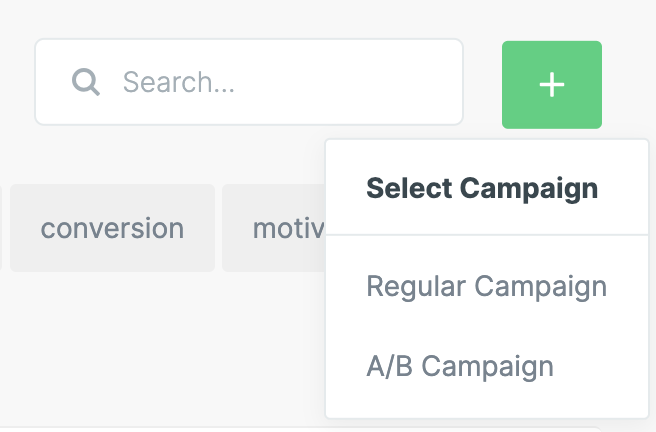
**Step 1**: Navigate in your account to Campaigns - Email Campaigns. From here, you will click on the green circle with the '+' symbol then A/B campaign to try out multiple templates and subject lines.
**Step 2:** Overview - Add general information to the campaign like name and objective.
**2a**: Campaign Name: This is for internal use only, your end-users will not be able to see this.
**2b**: Tags: This is optional and for internal use to organize your campaigns. End-users will not see tags.
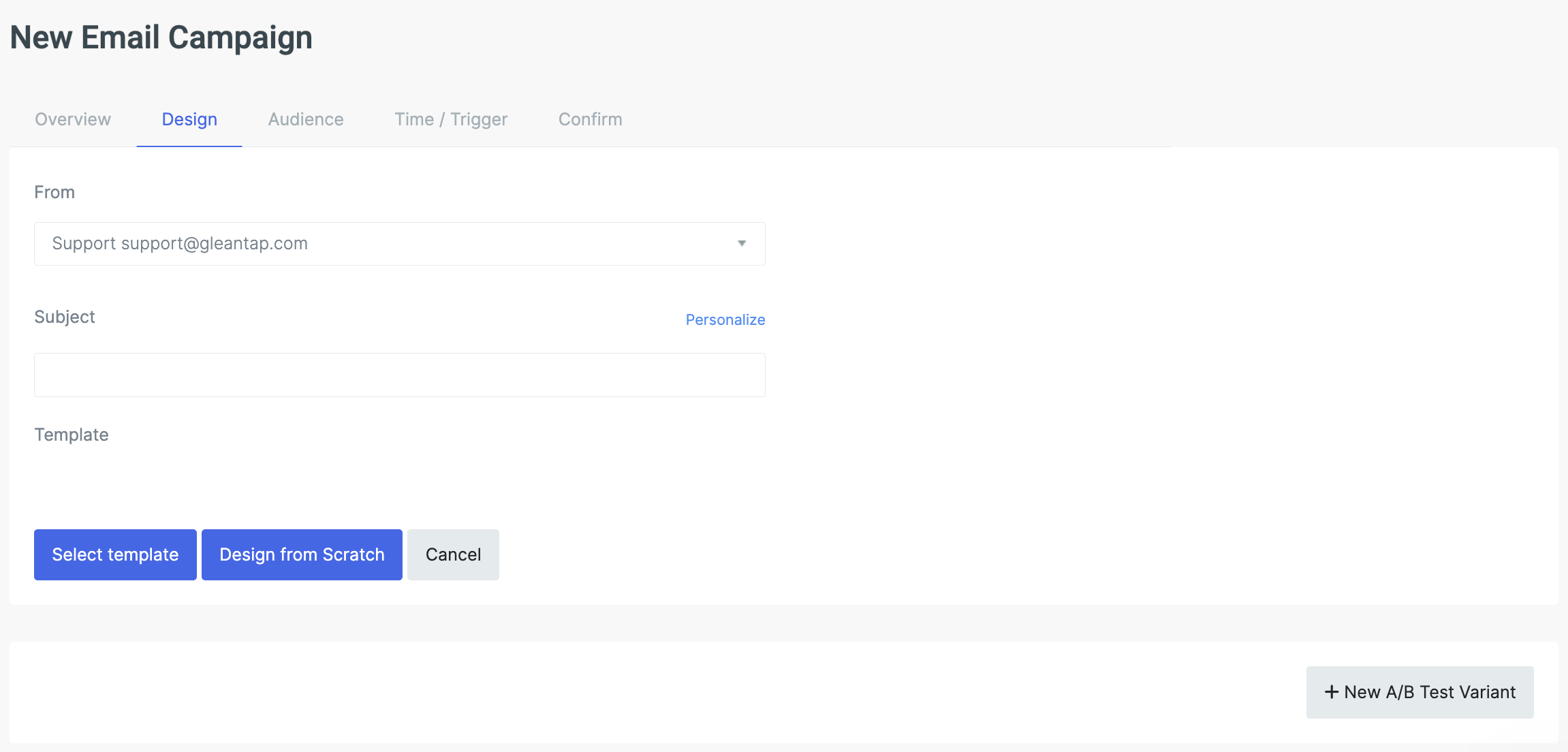
**Step 3**: Design - Select the 'From' address, create your Subject line, and choose a template to use for this campaign.
**3a**: Once the template is selected, you can make edits to the template before saving for this campaign.
\*Keep in mind that the template will only save for this one campaign. Any changes made at this stage will not be reflected on the original template.\*
**3b**: New A/B Test Variant: Click '+ New A/B Test Variant to add your campaign and follow the above instructions to create this variant. We recommend creating no more than 3-4 variants.
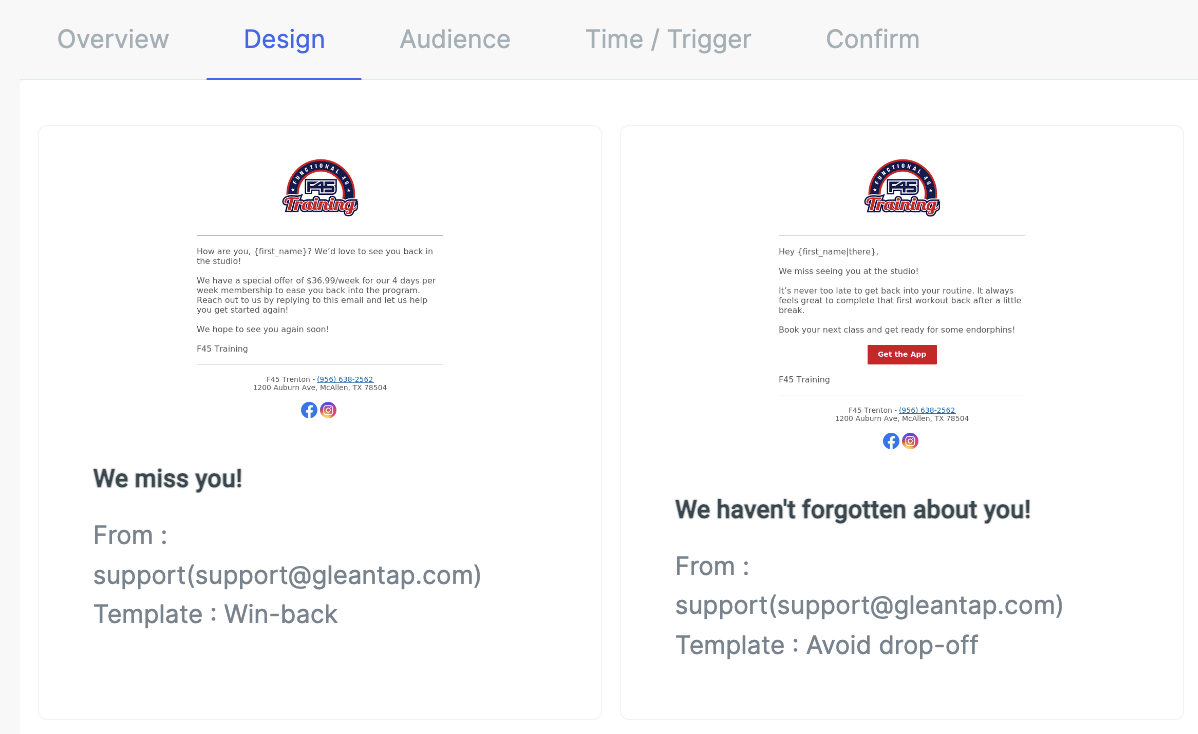
Once you have made selections for all variants, click 'Done.' You will then be shown a preview of each variant.
'From' Email: This will be the email address that your end-users see the email coming into their inbox from, so make sure you select the email you have designated for this purpose.
Responses to this email will go to the email you select as the 'from' email. If you want responses to go to a different email address, click on 'Add a Reply to' and select an email address from the drop-down to re-route responses to a different inbox.
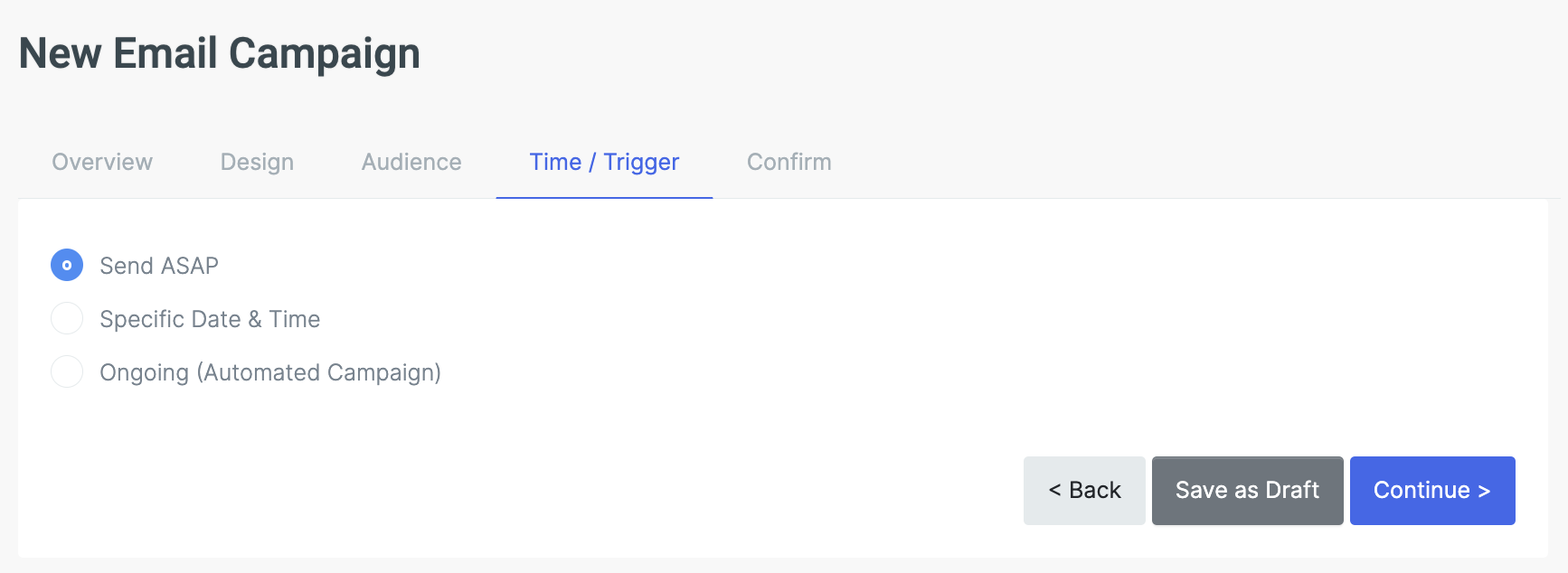
**Step 4** - Time/Trigger - This is where you can select when your email will send.
**4a**: Send ASAP: If selected, once you confirm the campaign, it will begin sending right away.
**4b**: Send Later: If selected, the campaign will begin sending at the time specified.
**4c**: Automated / Ongoing: If selected, the campaign will send once confirmed to the current audience + anyone added to the audience moving forward.
For example, if I make an audience of people on the 'Intro' membership plan, each time a new person signs up for the 'Intro' membership plan, this email will send.
**Step 5**: Confirm - If everything looks correct, you can confirm your campaign and finish up the process by clicking on the button that says 'Confirm' and your campaign will begin sending.
---
# Agent Instructions
This documentation is published with GitBook. GitBook is the documentation platform designed so that both humans and AI agents can read, navigate, and reason over technical content effectively. Learn more at gitbook.com.
## Querying This Documentation
If you need additional information that is not directly available in this page, you can query the documentation by asking a question.
Perform an HTTP GET request on the following URL with the `ask` and `goal` query parameters:
```
GET https://help.gleantap.com/campaigns/creating-a-campaign/a-b-campaign.md?ask=&goal=
```
`ask` is the immediate question: it should be specific, self-contained, and written in natural language.
`goal` is what the user is ultimately trying to achieve, the reason they need the answer. Sharing it helps GitBook give you a better, more relevant answer. A goal is most helpful when it describes the outcome the user wants rather than restating the question. For example, with `ask=how do I create an API token`, a goal like `automate deployments from our CI pipeline` lets GitBook tailor the answer to that use case.
The response will contain a direct answer to the question and relevant excerpts and sources from the documentation.
Use this mechanism when the answer is not explicitly present in the current page, you need clarification or additional context, or you want to retrieve related documentation sections.